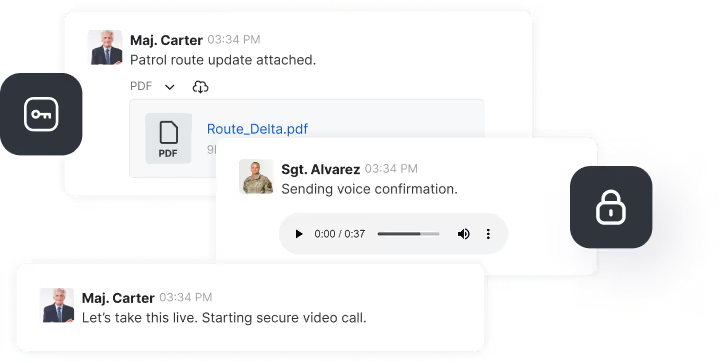
Your teams are operating in environments where leaving the approved platform is not an option. v8.3 makes sure they never have to. Federation is now production-ready, built and tested for cross-agency operations at scale. Screen sharing is now native to voice calls, keeping every conversation inside the secure perimeter. This is what mission-critical build standards look like in practice.
When you build a secure environment, you account for every risk you can see.
What you cannot always account for is the moment your teams hit a wall inside that environment and step outside it to keep moving.
- A screen share through whatever tool was handy.
- A coordination gap because a partner agency was on a different server.
It's not negligence, but just people doing what it took to get the job done.
v8.3 is built to close such data handling gaps because at Rocket.Chat, mission-critical is not a market segment. It’s a build standard.
- Federation is now generally available, built and tested for the scale and reliability of joint operations.
- And screen sharing is now native to your voice calls, on your secure infrastructure, with no third-party bridge.
When everything your teams need to collaborate lives inside a single, sovereign workspace, there's no reason to reach for an unapproved tool and every reason to stay on the platform you've already secured.
Federation optimized for the environments where operational stakes are highest
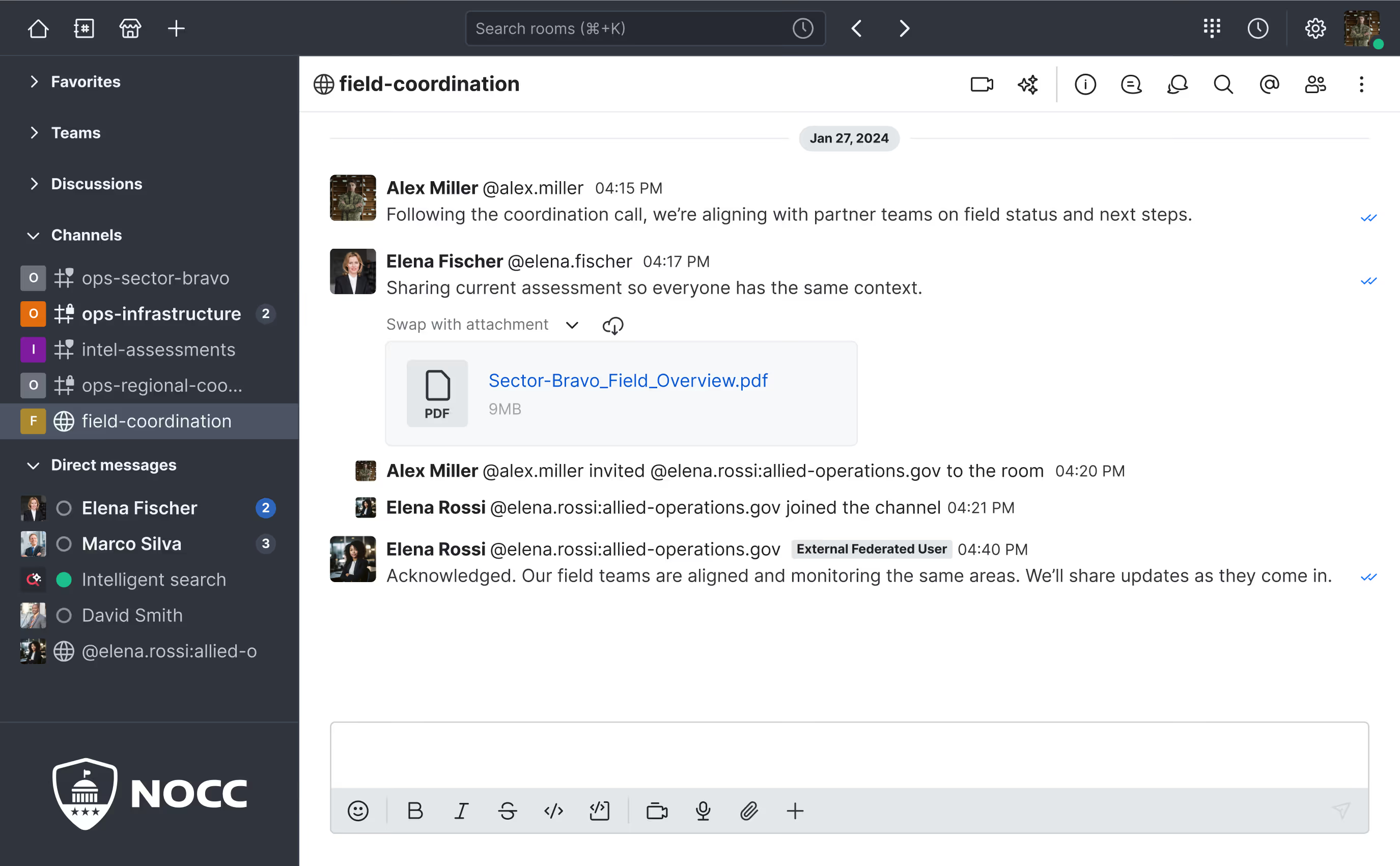
Rocket.Chat's federation is now generally available. This marks the transition from a capability we've trusted customers to evaluate and deploy in beta, to a fully supported, optimized federation model that powers mission-critical collaboration across organizational boundaries at scale.
Guaranteed performance under real operational conditions
Multi-agency coordination environments are unpredictable by nature. Partner servers can go dark, traffic can spike unexpectedly, and even trusted allied infrastructure can inadvertently become a source of disruption.
Rocket.Chat federation operates with a Zero-Trust posture: your workspace remains protected and performant even when external conditions are unpredictable. Partner instability stays on the partner's side.
We've tested it, documented it, and we're committing to it. Load testing confirms reliable performance in federated rooms supporting up to 500 users across government and defense deployments.
Cross-domain read receipts for situational awareness
In command-and-control operations and inter-agency coordination, the question is never just whether a message was sent. It is whether the right person, on the right server, in the right organization, has received and read it.
Federated read receipts close this gap. Acknowledgement now propagates across server boundaries, giving coordinators cross-domain visual confirmation that critical communications have reached their recipients. No manual follow-up. No confirmation chasing. No ambiguity about whether an update was consumed by a partner server or silently dropped.
For agencies managing multi-organization incidents or sensitive joint operations, this is a meaningful shift in situational awareness.
Moderation and access control built for governance
Federated rooms bring external participants into your communication environment. Organizations operating under strict access control and audit requirements need clean, auditable mechanisms for managing that access.
Administrators now have full moderation control in federated rooms. Ban any participant regardless of their origin server. Every action is recorded in a dedicated banned users list with transparent system messages explaining exactly what occurred. For organizations subject to information governance requirements, oversight reviews, or security investigations, the record is complete, attributable, and non-negotiable.
Trusted identities, instantly recognizable across every server
External participants are now displayed with their actual display name and avatar rather than their raw Matrix identifier. In operational environments where speed and clarity are essential, immediate recognition of who you are communicating with reduces friction and eliminates a category of confusion that has no place in high-stakes rooms.
To understand how federation works, what's supported, and how to configure it for your environment, refer to our technical documentation.
Native screen sharing is live
A voice call without screen sharing is half a conversation, because every voice call has a moment where words stop being enough. It takes one too many "let me just share my screen real quick" moments to prove it, such as when:
- a commander needs to show a field team the updated route, not describe it over comms while they squint at an outdated map.
- an analyst needs to walk an investigator through what they're seeing on screen, not narrate it and hope the details survive the translation.
- a public safety supervisor needs to point at the exact protocol that applies right now, not recite it and wait for someone to misread it.
In each of those moments, someone says "let me show you" and leaves the platform to do it through whatever tool happens to be installed. It takes thirty seconds, it gets the job done, and nobody thinks twice about it, until they have to.
That workaround is a data handling decision. Made under pressure, in the middle of a call, by someone who just needs to move forward. That is how exposure happens, and that is how you lose continuity. In operational environments, sometimes more than that.
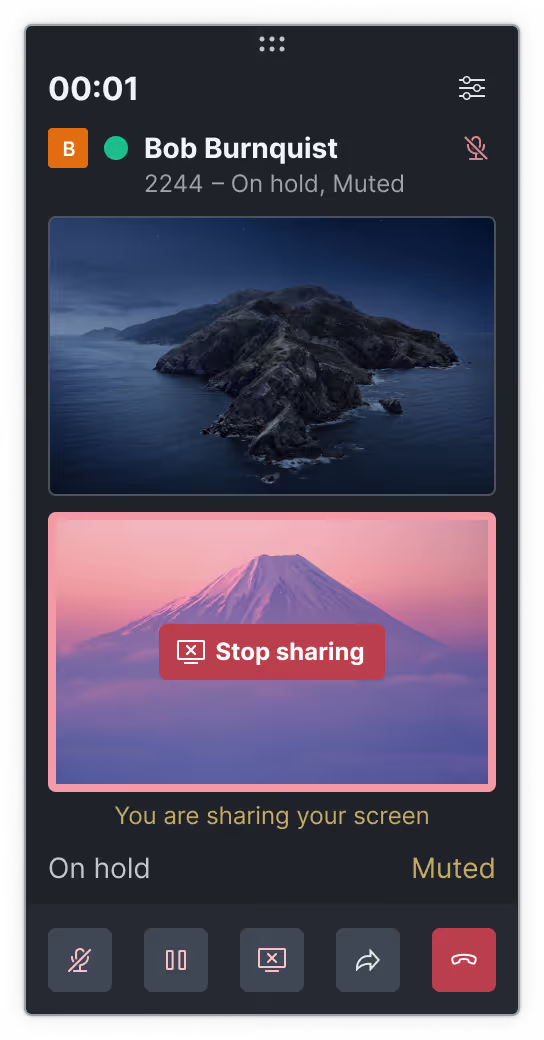
v8.3 removes the workaround. Screen sharing is now native to Rocket.Chat voice calls: peer-to-peer, on your infrastructure, inside the security perimeter you have deployed, hardened, and control end to end.
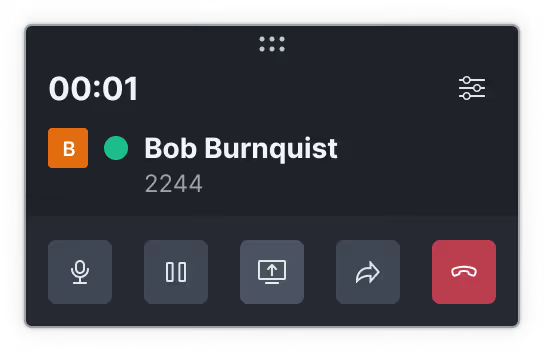
A shared screen, live and in context, removes an entire category of communication error. The chain stays intact: custody of communications, continuity of context, and the conversation itself, all in a single, sovereign environment where every mode of communication — voice, text, and now screen — is secure, reliable and integrated.
What’s available in beta
- Native, peer-to-peer screen sharing within voice calls (no third-party bridges)
- Supported across web and desktop app
- Ability to view a shared screen in the call widget without leaving the conversation, or access the ongoing conversation when the details demand your full attention
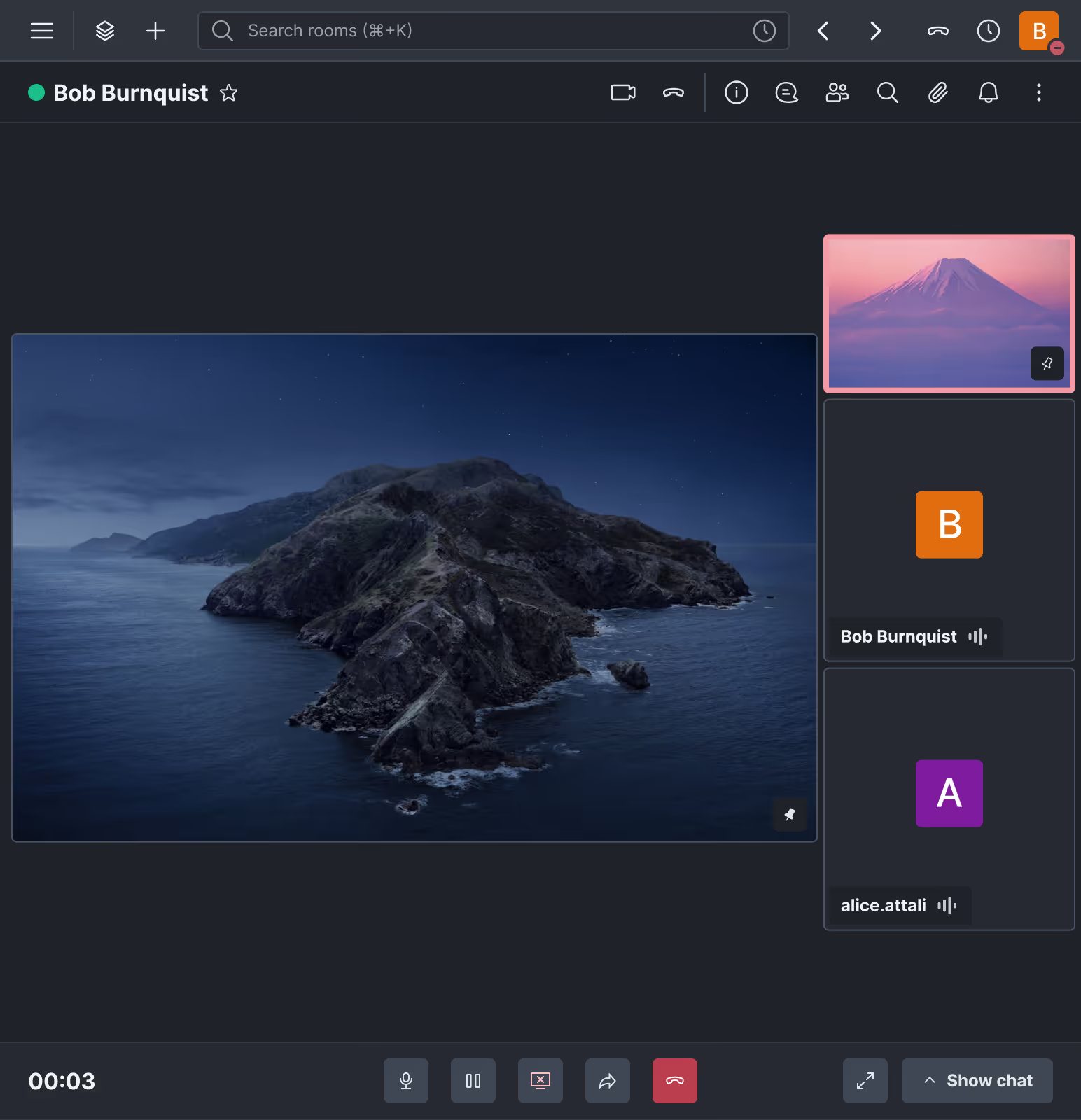
This is the foundation. Group screen sharing and broader calling surface support follow.
If your org depends on Rocket.Chat for mission-critical communication, this is the moment to get hands on it. Beta access means you shape what production-ready looks like. We encourage you to pressure test it against your environment and tell us what you find.
Send more, type less: multi-file uploads are here
Sending files one at a time while a conversation is waiting on you is friction nobody needs.
v8.3 lets you:
- select and send multiple files in one go
- preview the selection, rename files, and pull anything out before it sends
- mention team members and write your message alongside the files so nothing arrives without context
Everything the recipient needs arrives together, in context, with no follow-up message required to explain what they're looking at or what to do with it.
Bug fixes
This release includes a number of fixes to improve overall stability, performance, and user experience. For a complete list of resolved issues in Rocket.Chat v8.3, check out the official release notes.
How to update your workspace to the latest Rocket.Chat version?
SaaS workspaces
The release happens automatically on our cloud, so no further action is required from your side. However, remember that updating instances might take a few weeks, so don't hesitate to contact our support team if you need to update your version sooner.
Self-managed workspaces
Depending on the installation mode, you might need to update your server manually. Check out the documentation for instructions.
.avif)
Frequently asked questions about <anything>


- Digital sovereignty
- Federation capabilities
- Scalable and white-labeled

- Highly scalable and secure
- Full patient conversation history
- HIPAA-ready

for mission-critical operations
- On-premise and air-gapped ready
- Full control over sensitive data
- Secure cross-agency collaboration
%201.svg)
- Open source code
- Highly secure and scalable
- Unmatched flexibility

- End-to-end encryption
- Cloud or on-prem deployment
- Supports compliance with HIPAA, GDPR, FINRA, and more

- Supports compliance with HIPAA, GDPR, FINRA, and more
- Highly secure and flexible
- On-prem or cloud deployment